
Board Game Café
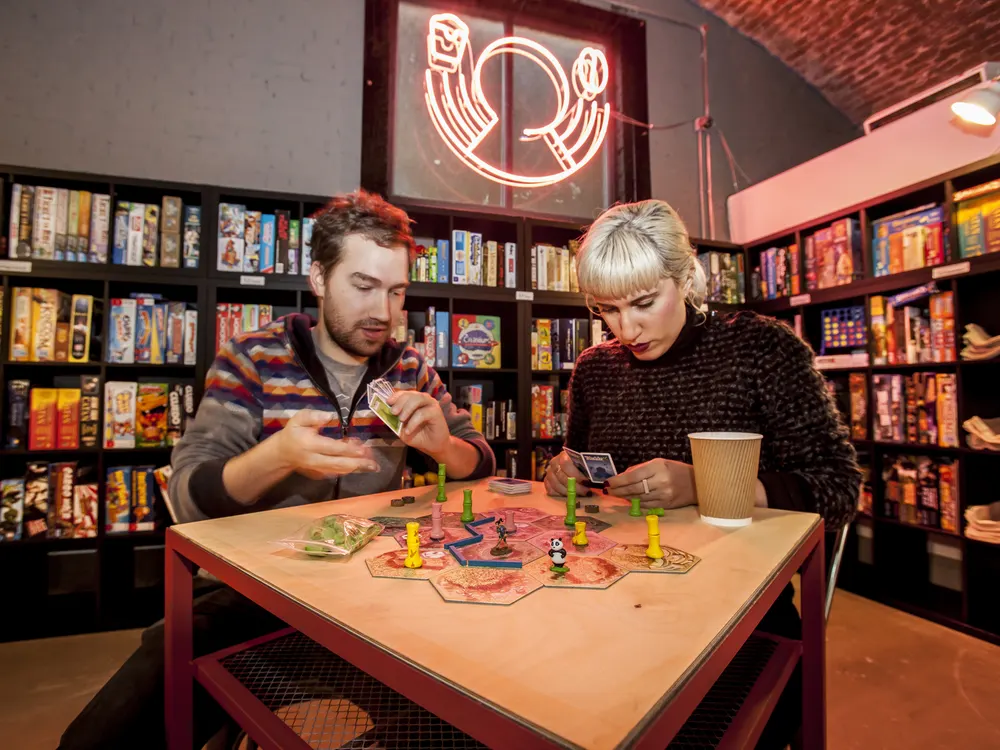
A board game café built for multi-hour stays, not table turnover: a curated library of 300-450 titles shelved and checked out like a lending library, counter-service coffee and light food, and a pay-to-play model. Most real cafés charge a flat per-person entry fee for unlimited play rather than renting individual games — Bard & Baker, a real counter-service board game café, charges $5/person on weekdays and $10/person on weekends for adults, unlimited play all day. Revenue comes from three places: the entry fee itself (near-pure margin once the door is staffed), food and drink sold at the counter while people play, and private bookings — birthday parties, standing D&D campaigns, corporate team-building — that fill otherwise-dead weekday afternoons. The smallest viable version skips a full commercial hot kitchen in favor of a coffee counter with light, mostly cold or panini-press food, because permitting a real kitchen is one of the most common things that delays or sinks these businesses. Community, not the size of the collection, drives repeat visits: tournament nights, a regular D&D table, and staff who know the library well enough to hand a new group the right game in 90 seconds are what turn a one-time novelty visit into a membership.
Real, if modest, cash flow once regulars show up — the near-pure-margin entry fee blended with food and drink can produce a genuinely healthy margin — but this is a $116k-215k food-service lease commitment with a 6-12 month community-building runway, not an $18k hobby-shop side project; undercapitalized cafés with kitchen-permit delays are the ones that quietly close after two years.
Skip the raw-shell lease if you can: taking over a second-generation café or restaurant space (existing plumbing, ventilation, grease trap) can cut your build-out line by half compared to a $80-150/sqft ground-up build. And once the space has a reputation, private event bookings — birthday parties, corporate team-building, standing D&D campaigns — tend to become the highest-margin revenue line, because they fill weekday afternoon hours that would otherwise sit empty, at a flat rate that doesn't depend on walk-in traffic.
Indoor social activity peaks in colder months (Jan-Mar, Oct-Dec) with a December holiday spike (gift-driven interest in games); summer (Jun-Aug) is the softest stretch as people are outdoors or traveling.
Suits you if
- ✓You have real food-service or café operations experience — health-permit compliance, POS, staff scheduling — this is a hospitality business first, a game store second
- ✓You can fund 6-12 months of working capital beyond the build so a slow community ramp-up doesn't force an early close
- ✓You already have (or can quickly build) local connections into the tabletop gaming community — Meetup groups, FLGS regulars, D&D groups — to seed opening-week traffic
- ✓You're comfortable with a multi-hour-dwell-time floor plan (far fewer covers/hour than a normal café) and can negotiate a lease that doesn't assume fast table turnover
- ✓You're building for a 3+ year horizon, not fast payback
Skip it if
- ✕You were budgeting under $50k — that doesn't cover a real library, furniture built for hours-long stays, and a working-capital cushion
- ✕You're planning a full commercial hot kitchen from day one — permitting delays here are a proven cause of cafés running out of cash before or shortly after opening
- ✕You don't have (or can't get) food-service/hospitality operating experience
- ✕You need profitability within the first year
- ✕Your local market already has an established board game café with a mature library and loyal membership base
Skills: Food-service and café operations experience matters more than deep board-game hobbyist knowledge day to day — health permit compliance, POS/inventory systems, and hourly staff scheduling are the daily reality. On top of that you need real game curation knowledge (teaching new players fast, matching groups to the right title, running organized-play nights) and community-building skills — tournament hosting, social media, local gaming-group relationships — since repeat visits from regulars, not one-time foot traffic, are what make the model work.
Unlock "Board Game Café"
Get the full step-by-step plan, tools list, and experience breakdown with lifetime access to the whole database.
Get full access